The Ngati Whatua land runs along the southern edge of the Unitec precinct – and adjacent Laurel St will carry the through traffic. Picture: Bruce Morris
The post Golfing battle back in court appeared first on Mt Albert Inc.
]]>The Save Chamberlain Park group, representing golfers from across the city, is challenging the board’s right to proceed with a development that will take away the 18-hole public course established more than 80 years ago.
The course has always been owned by the city council but the local board effectively became its guardian after the creation of the supercity in 2010.
In place of the full course, the board proposes a new nine-hole layout, driving range, sports fields, more public areas and perhaps a new aquatic centre to replace the pool in the grounds of Mt Albert Grammar School that is on borrowed time.
The pro-golf group wants the course left as it is, arguing it is an asset with city-wide benefits and, as such, should not be developed by a parochial local board. It also questions the public consultation process, which it considers to have been flawed – a claim the local board rejects.
The golfer-led group raised $50,000 for a judicial review of the decision and two days were set aside last November for the High Court to hear the challenge. But at the end of the allocated hearing time, when lawyers acting for the board and Auckland Council were only part-way through their arguments, Justice Simon Moore adjourned the case until February 8.
It is unclear how long it will take the judge to hand down his ruling after he has heard the remaining arguments — it could take weeks for him to write up his judgment, given his other bench duties.
The first stage of the redevelopment is the only part of the local board’s Chamberlain Park master plan so far to receive Auckland Council funding (drawn from developers’ compensation for burying streams elsewhere). The physical work was due to begin this month, but it is now on hold, pending the result of the judicial review.
Under the plans for stage one, if it proceeds, four holes on the existing course will be reduced in length and their layouts changed as workers begin improvements to stream and wetland areas to create public open space at the western end of the park.
The new space will be buffered from the golf course by planting along the eastern edge of the Meola Creek/Waititiko and will include a range of community facilities including a playground and BBQ area.
Bruce Morris
Full backgrounder on the Chamerbain Park issue
The post Golfing battle back in court appeared first on Mt Albert Inc.
]]>The post Council avoids iwi land question appeared first on Mt Albert Inc.
]]>Against the advice of its own transport agency and with the misgivings of a lead planner, the council last month granted Ngāti Whātua the right to subdivide land it owns within the Unitec block.
The decision was made by a duty commissioner and raised local concerns that it appeared to over-ride a key requirement of the independent hearings panel that established the Wairaka Precinct under the Unitary Plan.
The Mt Albert Residents’ Association (MARA) and local planner Craig Magee insisted it was made clear under the Unitary Plan provisions that such applications would trigger the integrated traffic assessment (ITA) that Unitec failed to produce at the formal hearings.
The issue is seen by locals as vital because it puts traffic measures and concerns at the top of the list – to be considered and actioned at the outset and not at stages throughout the development of the project.
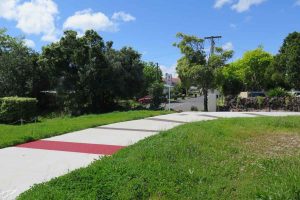 But the commissioner decided the iwi proposal did not fall within the scope of that commitment – and now the subdivision work can begin around the end of Laurel St without regard to the overall traffic impact of the whole precinct development.
MARA co-chair Sir Harold Marshall wrote last month to Mayor Phil Goff and councillors, asking: “Was this a deliberate abrogation of the recommendation of the hearings panel? Or could it have been a simple oversight by the duty commissioner?
“Either way it demonstrates a failure of process, as the [council] governing body accepted the recommendation of the duty commissioner and she was demonstrably mistaken.”
Sir Harold received a reply yesterday from ward councillor Cathy Casey – the same response received by Mt Albert Inc, which had approached the council separately.
The responses covered all the background, but skirted around the issue of whether a mistake had in fact been made.
The council letter, in the name of Anna Wallace, manager of premium resource consents, said: “In the Unitary Plan, there is a special information requirement for the first resource consent application for subdivision of this site to include an Integrated Transportation Assessment (ITA). Ngāti Whātua submitted a localised – rather than precinct-wide – ITA with its application which was assessed by Auckland Transport and Auckland Council’s traffic engineer.”
She listed the commissioner’s conditions attaching to the subdivision consent, including:
– A $100,000 bond to contribute towards the transport upgrades identified by the precinct-wide ITA.
– A physical barrier to be built between Laurel St and the Unitec land to restrict vehicles in the meantime.
– Restricting the Ngāti Whātua subdivision to a total of 120 housing units until a precinct-wide ITA is approved.
Sir Harold said in a return personal letter to Dr Casey yesterday that the special conditions proposed by the duty commissioner, while worthy in themselves, did nothing to explain the reasoning that led to the consent being granted.
“Rather, they obfuscate the fact that the consent contradicts a specific requirement of the Unitary Plan,” he wrote.
“As a starting point, from MARA’s perspective, an acknowledgement that an error was made by council is necessary. Perhaps the conditions imposed will then go some way toward ameliorating the effects of this error and expedite the provision of an ITA for the entire precinct as is required by the Unitary Plan.”
After hearing the response to MARA and Mt Albert Inc, Craig Magee said the question remained: “Why did the council, via the duty commissioner, dispense with the need to meet the information requirement for the very first application when the whole basis of the requirement was to ensure that no subdivision or other development takes place until the ITA is provided and approved?
“The reasoning for having the ITA first was so the ITA isn’t compromised and limited by any granted consents. Unfortunately, now it will be.
“In terms of specifics, why did the decision say, explicitly, that the ITA requirement did not apply, when it clearly did?”
Mr Magee says Laurel St will be a key link between the precinct and the southern neighbourhood, and precinct provisions require steps such as traffic calming to limit effects on that neighbourhood.
“How is granting subdivision consent at the Laurel St/precinct interface, before an ITA is submitted or approved, consistent with that?” he asks.
“… For some reason the council appears to be facilitating this for them. Of course the background context to this is the council seeming to lack interest in this fundamental issue during the Unitary Plan hearings process. It continues to provide the appearance that the landowners are calling all the shots, and all the local community can do is react after the fact.”
· The ITA was originally expected to be made public in October/November, but obviously will not now be produced until next year.
Bruce Morris
The post Council avoids iwi land question appeared first on Mt Albert Inc.
]]>The post Noise and dust will test patience appeared first on Mt Albert Inc.
]]>Preparation work is due to begin on February 7 and an uneven site sitting on a volcanic rock base will pose challenges to the developers.
But people living around the 8094sq m block, including elderly folk in the units along the eastern perimeter, will have their own headaches. Dust is inevitable, and the noise and vibration from rock-breaking and heavy machinery will test their patience.
 There are rules that must be followed, though, and Housing NZ will have a community liaison officer to whom breaches can be reported.
The resource consent decision sums it up this way: “Adverse effects on the neighbouring properties arising from the proposed excavation, rock-breaking and construction will be temporary in nature and can be appropriately managed.”
Under the consents, the rock-breaking work can be done only between 7.30am-6pm, Monday to Friday, and 7.30am-1pm on Saturdays. Decibel levels must be 80 or lower – with a maximum spike to 95 decibels – measured 1m from the façade of any occupied building.
How loud is 80 decibels? Bad enough if it’s your neighbour mowing the lawn outside your window, but very intrusive if it bangs on for six or eight hours, day after day, with peaks rising sharply higher.
For other construction work at Asquith, the consents demand lower decibel levels:
– Weekdays: 6.30am-7.30am (55 decibels, with maximum spike of 75 decibels); 7.30am-6pm (70/85); 6pm-8pm (65/80); 8pm-6.30am (45/75).
– Saturdays, 7.30am-6pm (70 decibels, with maximum spike of 85 decibels); 6pm-7.30am (45/75).
– Sundays and public holidays: 7.30am-6pm (55 decibels, with maximum spike of 85 decibels); 6pm-6.30am (45/75).
Time will tell whether the excavation and rock-breaking can indeed be “appropriately managed”, but the contractors are required to prepare, implement and monitor a “construction noise and vibration management plan”. All the work will be subject to close scrutiny and decibel readings to make sure limits are not exceeded.
Housing NZ initially hoped the levelling and rock-breaking might be completed within a couple of weeks but planners suggest that target – dealing with volcanic rock – may be optimistic and the resource consent makes reference to “longer than 15 days”.
A provision in the consent documents for a communication plan if the rock-breaking takes more than four weeks gives a clue to the uncertain nature of the work.
It could be that locals are in for three weeks and more of heavy machinery, trucks, drilling, blasting and dust over the late summer before the pre-building infrastructure is tackled. That work will include connecting power and water to the block; handling waste water/stormwater; establishing detention water tanks; preparing for driveways and stormwater; landscaping, removing and planting trees; capping existing services, and installation of fibre.
Bruce Morris
The post Noise and dust will test patience appeared first on Mt Albert Inc.
]]>The post United voice for wastewater rate appeared first on Mt Albert Inc.
]]>Mr Goff has signalled a special rate targeted at improving water quality – costing about $1.70 a week for an average household. Most of that will go towards speeding up the $1 billon-plus Central Interceptor pipeline through Mt Albert to the Mangere wastewater treatment plant, reducing overflows into the Waitemata Harbour within 10 years – 20 years earlier than planned.
The initiative will help to stop stormwater laden with pollutants and sewage from pouring into the Waitemata every time we have a decent downpour.
A collective of Auckland environmental organisations, led by two local groups, has welcomed the mayor’s commitment, calling it “a bold vision for a cleaner, safer future for all Aucklanders”.
Spokespersons for the organisations, Elizabeth Walker (St Lukes Environmental Protection Society), Bronwen Turner (Manukau Harbour Restoration Society) and Wendy John (Friends of Oakley Creek Te Auaunga), say Auckland has waited 50 years for such significant action on reducing the pollution.
Millions of cubic metres of combined sewage and stormwater overflow into central Auckland’s parks, streams and harbours (and in many cases private properties) every time Auckland gets significant rain, say the three groups.
Meola Creek catchment, for example, has more than 100 overflows a year of sewage and stormwater containing biological, chemical and heavy-metal contaminants – attacking biodiversity and posing dangers for people and pets.
“Because the pollution from overflows moves quickly around the Waitemata and Manukau harbours and remains in the harbours for extended periods, the ability for Aucklanders to safely enjoy the harbours and streams has been highly compromised for decades,” says a statement from the three groups.
“For example, the new Judges Bay beach development makes it a lovely inner-city place for families to swim and enjoy over summer, but like Pt Chevalier, Onehunga Lagoon and St Heliers Bay beaches, it is unsafe for swimming on far too many occasions.”
The organisations have outlined goals and steps for stream and harbour cleanup such as separating stormwater and sewage, treating stormwater before it reaches harbours, and recharging aquifers.
Separating stormwater and sewage reduces peak loads currently causing treatment bypasses at the Mangere Treatment Plant. Improved treatment of stormwater is particularly important as a base for Auckland’s response to expanding development and future climate-change impacts.
“There will be some who oppose such expenditure,” says Ms Turner, “but these voices cannot be allowed to drown out those who have worked for many years for cleaner fresh water streams and harbours. The proposed improvements will significantly enhance Auckland’s living quality for everyone and we encourage Aucklanders to support them.”
Full backgrounder on the wastewater issue
If you want to know more or are keen to get involved, try the Stop Sewage Overflows Facebook page or the STEPS page
The post United voice for wastewater rate appeared first on Mt Albert Inc.
]]>The post Feb 2019 is Asquith move-in date appeared first on Mt Albert Inc.
]]>The state agency has given more details on the development, naming Takapuna-based Build Partners as the lead contractors and pinpointing February 18, 2019, as the target completion date.
Before the development begins to take shape above the ground, the contractors will get moving on the “civil establishment” of the site, which is set to start on February 7 and will take an estimated 155 days.
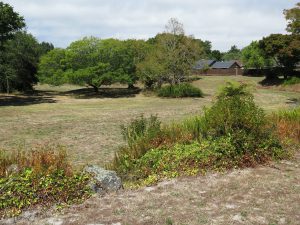 Civil establishment is developer-speak for all the associated works needed to prepare the block (pictured here), With a site as large as Asquith’s 8094sq m, the construction team will probably be able to work on one area as another is being prepared. That pre-building work would normally cover major areas like:
Excavation and the inevitable rock-breaking on land that is laden with volcanic rock; power and water to the block, and waste water/stormwater from all sites and common areas; detention tanks (to detain water from site); preparing for driveways and stormwater; landscaping; capping existing services; removing trees; installation of fibre.
A Housing NZ executive says the plans haven’t changed over the long months since the corporation unveiled its masterplan in March 2016 for 20 privately-owned four-bedroom homes and 20 one-bedroom units for state tenants.
The four-bedroom homes, built to high specifications, will run along three sides of the perimeter – leaving a central green space ringed by a footpath leading through the “village”.
The units for state tenants – probably for elderly folk or those living on their own – will be in a block along the Maybeck Rd side of the land.
The private homes will be placed with a real estate agency to sell on the open market and the state tenants and buyers will move into the new homes around the same time.
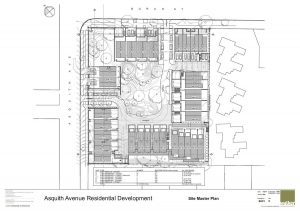 Mt Albert Inc has asked further questions about the new site masterplan (pictured) because it appears to have changed in some minor respects. For example, there seems to be no private entry to the state units from Asquith Ave, as originally allowed; entry now appears to be from the middle of the development.
Housing NZ also declined to answer some specific questions posed by this website on the delay and is now treating them as a request under the Official Information Act.
Those questions are (and the answers will be revealed when and if the corporation answers them):
– When the master plan was revealed in 2016, HNZ hoped work would start around November of that year. While the resource consent process seemed to take more time than expected, what was the main reason for the delay? The tender round ended in February, of course – so were market conditions (tight margins from well-committed developers, leading perhaps to a lack of commercial interest) the issue? If not, what were the main problems – the main reason for the delay?
– Did HNZ have to increase its budget to fit the original plan – or has that original plan “suffered” in some way?
– Will Asquith still be a highly-specced development, or has HNZ been forced for budgetary reasons to cut some costs (and thus reduce the quality of the homes)? If that is so, where have the cost cuts been made?
Bruce Morris
What an Official Information Act request finally revealed
Last week’s story announcing the New Year start
The post Feb 2019 is Asquith move-in date appeared first on Mt Albert Inc.
]]>The post Hiccup in Chamberlain Park plan appeared first on Mt Albert Inc.
]]>The Save Chamberlain Park group gathered more than 6000 signatures on a petition against the Albert-Eden board moves and raised $50,000 to bring the review.
Two days were set aside last week to hear the challenge in the High Court at Auckland, but Justice Simon Moore adjourned the case until February 8 when lawyers acting for the board and Auckland Council were only part-way through their arguments at the end of the allocated hearing time.
It is unclear when the judge will give his decision but it is likely he will take some weeks, around other bench duties, to write a judgment.
The first stage of the redevelopment is the only part of the board masterplan so far to receive council funding (drawn from developers’ compensation for burying streams elsewhere), and work was due to begin in mid-February.
 The overall plan is to turn Chamberlain Park into a nine-hole course with driving range and introduce sports fields, more public areas and perhaps a new aquatic centre to replace the pool in the grounds of Mt Albert Grammar that is on borrowed time.
But the first development stage is just that – a start, though it involves major stream and wetlands work. It provides for a new public open space at the western end of Chamberlain Park which is accessed via Sutherland St and Rawalpinidi Reserve via a new bridge across Waititiko/Meola Creek.
The new space will be buffered from the golf course with planting along the eastern edge of the creek and includes a range of community facilities like a playground and BBQ area.
The first stage work will have an impact on four holes on the course, reducing their length and layout.
However it seems certain the start date will be delayed until the judge gives his decision, and suggestions from the courtroom were that lawyers for both sides would negotiate a compromise in the meantime.
The council’s head of operational management, Agnes McCormack, told Mt Albert Inc last week that “development work at Chamberlain Park is currently on hold pending judicial review”.
That seemed fairly clear cut, indicating the council and board accept the redevelopment work can’t proceed until the judge delivers his judgment.
However, a statement this week from the council’s general manager of community facilities, Rod Sheridan, was less precise: “Auckland Council is assessing the impact of the adjournment on the planned redevelopment of the western end of Chamberlain Park…”
Just what that means is unclear, but Mr Sheridan was saying no more – “We do not have anything further to add on this at this stage”.
It would be a huge surprise, though, if the masterplan was progressed with physical work before the court ruling was disclosed.
Bruce Morris
Inside: the two sides of the argument
The post Hiccup in Chamberlain Park plan appeared first on Mt Albert Inc.
]]>The post The perils of toxic stormwater appeared first on Mt Albert Inc.
]]>
Mt Albert people need to step up and play their role in helping to save Auckland’s creeks, beaches and harbours from pollution after decades of neglect.
That’s the strong message from one of our environmental leaders, Elizabeth Walker, chair of the St Lukes Environmental Protection Society (STEPS), and at the centre of the group’s concerns is Meola Creek, which runs through Mt Albert.
After heavy rain, the normally quiet-flowing creek turns into a raging torrent – eventually dumping its toxic blend of suburban waste into the Waitemata Harbour.
While Auckland Council has the prime responsibility of cleaning up the city’s waterways for future generations, STEPS wants everyone to share its vision of an Auckland where:
- Our beaches are suitable for swimming
- People live in balance with our creeks, rivers, harbours and water use
- Native fish and birds can be seen at all our creeks
- Kai moana can safely be gathered and consumed
But, says Elizabeth Walker, this will only be possible with the help of every person and an acceptance that we all have to pay if we want clean harbours and beaches.

The problem is that stormwater after heavy rain flows into sewage pipes, and the polluted mixture – with sediments and heavy metals from roads and roofs – quickly ends up in creeks feeding the harbour.
Elizabeth (pictured here on the Roy Clements Treeway at the edge of Meola Creek) says Auckland Council has under-invested in handling stormwater, “and we believe it can no longer be treated as a buried problem”.
“But it is us, not just the council, who drive the cars and build concrete surfaces,” she says. “We all need to help by planting alongside streams or monitoring pests, or just by living in a way that respects the fantastically beautiful volcanic landscape on which Auckland sits.
“Let’s help the council do the right thing for the harbours by dealing with our stormwater, so that future generations are not caught in the same situation. “
Elizabeth has written a backgrounder for Mt Albert Inc detailing the enormous environmental cost of an expanding city that until now has chosen to side-step the pollution dangers of stormwater.
And one of the biggest contributors to the pollution of the Waitemata Harbour is Meola Creek, which runs through the heart of Mt Albert alongside the treeway.
When it rains, the creek rises rapidly with metal-laden stormwater and sewage, dumping about a million cubic metres of polluted waste a year into the Waitemata.
STEPS wants Auckland Council – and Aucklanders generally – to push water treatment up alongside transport as the most critical issue to tackle to protect the city and its waterways for future generations.
“We want the council to start on stormwater treatment and wetland pilots immediately – and the STEPS wetland in the treeway is an example of how much nature can do to treat water and recharge the aquifer if the council can just slow the flow,” says Elizabeth.
“The best stormwater treatment is “green” – wetlands and rain gardens. We can all contribute but the council and Auckland Transport need to deal with the massive amounts of road runoff. “
After decades of relative inaction, the council is showing signs of getting serious. In October, the environment and community committee voted to consider the proposed stormwater infrastructure proposal for the western isthmus as part of the long-term plan consultation in February next year.
The long-awaited proposal for stormwater and wastewater work around the planned Central Interceptor includes stormwater separation, a wastewater tunnel from Grey Lynn (Cox’s creek) and stormwater treatment.
But in the end, it all comes down to money and priorities – and STEPS hopes Mt Albert people will offer their voices in support of clean creeks, harbours and beaches for future generations.
Bruce Morris
The big issues: the future of our waterways and Mt Albert’s part in it
The post The perils of toxic stormwater appeared first on Mt Albert Inc.
]]>The post Council bows over Unitec moves appeared first on Mt Albert Inc.
]]>The giant Unitec plan to develop a new township with up to 3000 homes has taken a surprise step forward – and the right of local residents to have a say on the shape of the first stage has been rejected.
Ngati Whatua iwi, which owns land along the southern boundary of the Unitec block (known under the Unitary Plan as the Wairaka Precinct), has been granted Auckland Council permission to create a new subdivision next to Laurel St. The new walking and cycleway runs through it.
The application by the iwi development company was approved by duty commissioner Leigh McGregor, despite the objections of Auckland Transport and the misgivings of the lead council planner.
Now, unless there is a judicial review of the decision, the iwi can start work immediately to create a road around the 1.779ha area within the Unitec precinct (previously a carpark) and, once it has been formally vested, run it through Laurel St. Contractors can also start to lay general infrastructure like power and water.
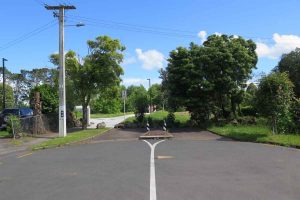 As the total precinct development advances over the years ahead, Laurel St will become a busy thoroughfare rather than the quiet little cul-de-sac it is today. (Picture shows the end of the cul-de-sac where it meets the cycle and walking pathway – and the Ngati Whatua land.)
The subdivision land – 40 per cent of the total iwi precinct holding – is zoned terraced housing/apartment under the Unitary Plan and the application suggested 60 standalone houses or 120 apartments were planned.
However, no resource consent has yet been granted for the development of the new lots and it may be that a higher density will eventually be sought.
Because of the lack of a traffic assessment for the whole precinct, Auckland Transport didn’t support the application. That led the council’s consultant planner to recommend a series of conditions before she would agree to the non-notification sought by the iwi.
When the iwi lawyers resisted the conditions, the planner removed them and recommended notification instead.
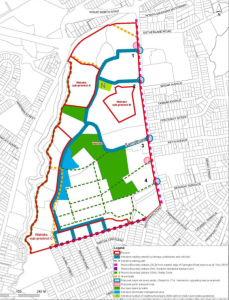 The legal team then found an ally higher up the planner chain and the duty commissioner decided the application should be non-notified and approved. In other words, local residents have been declined a say.
The decision will be a surprise and disappointment to locals because it was made clear under the Unitary Plan provisions that consents of this type within the precinct would only be granted after formal traffic assessments.
To some eyes, it seems as if the council has bowed to the pressure of an applicant and ignored the rules outlined in the creation of the precinct.
Wairaka Land Company, Unitec’s own development wing, has been working for some months on that assessment, providing data for Auckland Transport. But it has still not been finalised and it would have been a surprise to Unitec that the iwi has been able to persuade the council its application should be granted without the detailed information.
Local town planner Craig Magee, who, with the Mt Albert Residents’ Association (MARA), has been a key voice articulating local concerns, says it’s extremely unfortunate and frustrating the council is approving consents in the precinct without an approved traffic assessment.
“This was a critical matter to MARA and many concerned residents who live to the south of the precinct, as evidenced by the time and effort we all went through during the Unitary Plan hearings,” he says.
“We were successful in demonstrating that Unitec had not undertaken sufficient traffic assessments, and the precinct was only enabled on the basis that a comprehensive and agreed-upon traffic assessment (an ITA) would be provided before any consenting.”
Mr Magee says this point was explicitly spelt out within the precinct provisions.
“But, despite this, as well as Auckland Transport’s objections and the council’s own reporting planner recommending notification of the application, Auckland Council appears to have acquiesced to pressure from the applicant and set aside the requirements of their own Unitary Plan.
“This is not a good start in terms of how development in the precinct is to be considered by Auckland Council.”
Bruce Morris
Full backgrounder on the Unitec project and its path through the Unitary Plan process
The post Council bows over Unitec moves appeared first on Mt Albert Inc.
]]>The post HNZ Asquith site: January start appeared first on Mt Albert Inc.
]]>When the construction crews come back from their summer holidays to start the project, it will be almost three years since the decaying old units were demolished and nearly five years since the last state tenants were moved out.
 For much of that time locals have enjoyed what has become a neighbourhood park – perfect for walking the dog, flying a kite or kicking a ball.
But that is about to end: neighbours will soon be enduring the dust and the noise and it will probably be two years before it’s all over.
Housing NZ is planning to tell neighbours this week that contracts for the job have finally been signed and work will begin sometime in January – probably mid or late month to avoid the Christmas-New Year break.
Fuller details have not yet been revealed, but the news confirms last week’s Mt Albert Inc story that some sort of action appeared to be just around the corner.
Extra information is expected to be revealed this week in a HNZ newsletter to immediate neighbours. Mt Albert Inc has asked a series of follow-up questions and the answers will be given on this site.
It is now 20 months since HNZ unveiled their masterplan for the 8094sq m block:
· Twenty four-bedroom homes (each of between 150-175sq m) to be sold to private buyers once the project is completed;
· Twenty one-bedroom units (each of about 61sq m) to be allocated to state tenants.
At that time, the broad plan was to start construction in October-November 2016 – aiming for a finish in the winter/spring of 2018.
 But the resource consent path took time and the tender round obviously did not go as well as hoped.
The result: eight or nine months to finally cement a deal with a development company partner.
The corporation has not yet confirmed that the mixed tenure approach and ratio will stay, but it would be a major surprise if there was a change to the ownership structure, even with the pressure to provide more social housing. It has always seen Asquith Ave as a model development, trying to successfully blend private ownership with state tenants.
Under the plan revealed in March last year, the four-bedroom homes would be built to high specifications. They would run along three sides of the perimeter – leaving a central green space ringed by a footpath leading through the “village”.
The 20 units for state tenants would be in a block along the Maybeck Rd side of the land. The size of the apartments suggests they would probably be occupied by one or two people, perhaps elderly folk, those living on their own or people with physical difficulties.
HNZ originally suggested the development would take around two years to complete. On that timetable, private owners and state tenants may be in their new homes sometime early in 2020.
Bruce Morris
Earlier stories:
– What an Official Information Act request finally revealed
– Last week’s story suggesting a start might be close
The post HNZ Asquith site: January start appeared first on Mt Albert Inc.
]]>The post Action soon on HNZ Asquith site? appeared first on Mt Albert Inc.
]]>All the rumours that have swirled over the last many months seem to have been just that and, no, the land has not been sold to a private developer.
Housing NZ is still holding its cards very close to its chest and has revealed very little since the March 2016 public meeting where executives unveiled the plan for a mixed tenure development producing 20 four-bedroom town houses to be sold privately and a block of 20 one-bedroom units for state tenants.
But Mt Albert Inc believes that, despite local suggestions the original concept might be redrawn or amended, the plan will proceed as intended.
On the time-table outlined 20 months ago, construction was due to have started around October-November last year, with an indicated completion date of winter/spring 2018.
But the consent stages seemed to take longer than expected, stalling the tender round.
Then, when the tender results finally emerged in March, there were obviously major issues, with HNZ leaving open the option of re-advertising the contract.
Since then, there’s been silence, though questions (on behalf of Mt Albert Inc) from Jacinda Adern in Parliament in June drew this response from then Housing Minister Amy Adams: “Housing New Zealand advises me that it is currently assessing options for the site and plans are yet to be finalised.
“The October 2016 start date for the construction of the Asquith Avenue site was as an early estimate. As options around the Asquith Avenue site are still being assessed, Housing New Zealand is not in a position to confirm dates relating to start of construction, sale of private units and move-in date of tenants.”
That talk of “currently assessing options” – the same sort of language used five years ago when the old units were due for demolition – raised questions over whether the corporation had run into budget concerns.
But the latest indications are that HNZ has worked its way through the issues and may soon be ready to make an announcement.
Bruce Morris
Go to big issues for a full backgrounder on the Asquith project
The post Action soon on HNZ Asquith site? appeared first on Mt Albert Inc.
]]>The post Key issues at heart of board plan appeared first on Mt Albert Inc.
]]>Hardly a surprise, but the board is moving ahead with its steps to implement its Chamberlain Park masterplan – aiming to develop a local park and playground, new paths and cycleways, restore the Waititiko/Meola Creek and provide for a quality nine-hole golf course (in place of the present 18-hole course) and driving range.
It also maintains its strong position on the Mt Albert Aquatic Centre, declaring it will continue to advocate to the council through its 10-year budget process for a replacement pool in Mt Albert or another appropriate Albert-Eden site.
That “another appropriate Albert-Eden site” gives a clue to how difficult it may be to retain a public pool in Mt Albert once the aquatic centre on the Mt Albert Grammar School grounds shuts in something like five-to-eight years.
The board is including a new pool in its Chamberlain Park redevelopment plans, with council land behind Rocket Park also in its broad sights. But if neither makes the cut – because of traffic issues or local objections, say – the board appears to be saying it may have to consider other sites within its boundary but outside Mt Albert rather than lose the facility to another area.
The 2017 plan, adopted last week, also reinforces the board commitment to the Mt Albert civic square – the present carpark behind Albert’s Post, with stairway to the railway bridge, that is tied up until 2022 by historic lease arrangements.
The objective has always been to develop an appealing square on the small block to give the town centre real focus, but the board’s best intentions came unstuck when the council ran headfirst into the rigid leases.
Local board plans are strategic documents that are adopted every three years to set a direction for the local area that reflects community priorities and preferences.
They guide local board activity, funding and investment decisions and also influence local board input into regional strategies and plans, including the Auckland Plan (the 30-year vision for Auckland), the council’s 10-year budget and annual budgets.
But any plan from a local board can come unstuck if the money isn’t there. All boards have made their cases under the council’s 10-year plan due to be adopted in June next year – and that will be a huge balancing act with major capital works on the horizon and ratepayers showing no appetite for big rate rises.
As Albert-Eden chair Peter Haynes notes: “This balancing act may impact local boards’ ability to carry out all the key initiatives in their local board plans.”
In his preamble to the 2017 plan, Dr Haynes said the plan built on the board’s work to make Albert-Eden a “safer, livelier, greener place that is easier to traverse, cherishes its heritage, and offers better choices to play, work and do business”.
He was pleased to see such a high level of feedback – second highest in the 21 local boards – and pointed to “seven outcome areas to guide our efforts over the next three years”. They were:
- We are all proud to live in Albert-Eden and feel that we belong. Our community is connected and everyone’s involvement is welcomed. We are able to come together to support each other, and to celebrate our diversity.
- Everyone can access the parks we share in Albert-Eden, and use them in ways that enhance their lifestyles. As a community we feel a shared ownership of our parks, and we take care of them together.
- Our shared facilities underpin our strong community. They provide diverse and inclusive spaces that meet the changing needs of people of all ethnicities and ages. We have spaces that are inviting, flexible and well used by multiple community groups.
- Our town centres are attractive to locals and visitors alike. Our local businesses are well supported and thriving, driving a strong local economy that creates opportunities for everyone in Albert-Eden. Well-established business networks foster innovation, growth and sustainability.
- It is simple to travel between the many places in our area that people want to visit. We have a range of options to meet the different needs of our community. We have quality public transport and our streets are safe and enjoyable to use.
- Our community has a strong awareness of our area’s heritage. We are proud of the features that give our area its unique character, and work together to protect and preserve them.
- Our community cares for our environment and develops innovative ways to look after it. Our natural landscape is healthy and well looked after.
Bruce Morris
Read the full plan at this link.
Go to Big issues page for details on Chamberlain Park, the village upgrade and the pool’s future
The post Key issues at heart of board plan appeared first on Mt Albert Inc.
]]>